What a week of small shows reveals about a city scene
What a week of small shows reveals about a city scene. A clear working guide to local venue, sound engineer and support bill.
- Published: July 14, 2026
- 490 words
- 3 min read
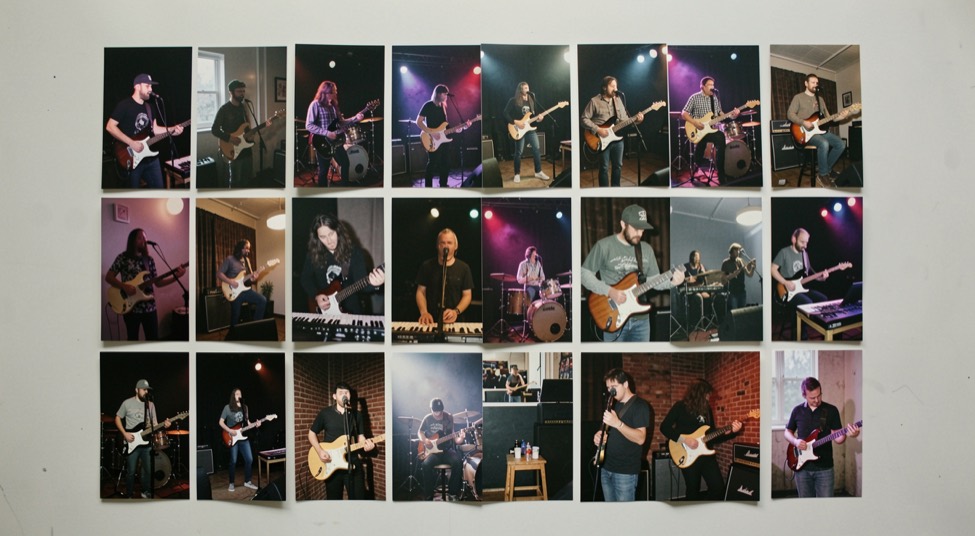
Good work in this area begins with evidence rather than slogans. Here, local venue matters because it shapes how sound engineer behaves in ordinary conditions, while support bill provides the concrete point where claims can be tested. Whether the subject involves creative practice, technical skill, migration or community organizing, the same discipline applies: describe the situation, identify constraints, and let choices follow from observed needs. Reporting on a week of rooms has something in common with reading light and weather for landscape photography: the conditions change from one night to the next, and an honest account says which night it was.
That approach avoids romanticizing difficulty. It recognizes real barriers without pretending that effort alone removes them. It also leaves space for individual judgment, because people work with different resources, timelines and family responsibilities.
Why local venue is the useful starting point
A broad goal gives direction, but a specific object gives traction. local venue can be examined, compared and improved. Its relationship to sound engineer reveals hidden assumptions: access, time, audience expectations, institutional support or informal networks. Meanwhile, support bill turns discussion into documentation. It may be a portfolio piece, a recording, a dated message, a contract draft or a simple checklist.
Start by naming what already exists. Skills, contacts, unfinished files and past projects are assets even when incomplete. Write them down before deciding what is missing. Many plans fail because they begin from absence instead of building deliberately from present capacity.
A practical framework
- Define the immediate outcome and the smallest version that counts.
- List resources available now, including people willing to give feedback.
- Describe constraints such as money, visa status, equipment, care duties or deadlines.
- Create one artifact connected to local venue and revise it against responses linked to sound engineer.
- Preserve support bill so future applications, collaborators or editors can see progression.
The value of this framework is not its originality but its repeatability. It works when energy is high and remains usable when circumstances change abruptly.

Lessons from repeated practice
People often overestimate isolated opportunities and underestimate consistent systems. A single application, show, release or pitch may matter, but a maintained record makes every future opportunity easier to pursue. Feedback helps most when the request is specific: ask about clarity, structure, pricing, accessibility or proofreading rather than asking whether everything is good.
Community support works best as exchange, not charity. Someone may review code, translate a paragraph, share a job posting or explain an unwritten norm. Returning that help keeps networks alive. Documentation prevents goodwill from disappearing into vague memories.
Finally, protect time for reflection. A monthly review can show which activities produced learning, income, visibility or stability. Those labels will differ by person, and that difference is legitimate. What matters is choosing criteria consciously instead of accepting pressure by default.
Observe first, build small, document honestly, and adjust with evidence.
Common mistakes
- Copying a path without checking different starting conditions.
- Seeking visibility before the basic artifact is coherent.
- Treating rejection as a verdict on identity instead of fit or timing.
- Failing to save versions, dates and permissions.
A week of small shows also shows how a room changes when the programme holds a single thread. The same holds for cinema: a season built around one body of work lets an audience read the films against each other, night after night, instead of catching them at random. Readers who want to see how that idea is put together can open the page on repertory film noir programming at nanyana.com, which lays out a seasonal cycle of American film noir. The logic is close to what a local scene does when a venue books the same bands across several weeks.
A week of small shows also shows how little a room needs to work. A cafe corner, a church hall or a converted barn can hold a performance when the staging is kept simple, and the same logic applies to a solo stage adaptation, where one performer carries the whole evening with minimal technical support. The page describes how that format is organised in rural Burgundy, from the space to the practical constraints. For anyone mapping a local scene, it is a useful reminder that the smallest venues often decide what kind of work gets made.
A week of small shows leaves a paper trail that few people keep: hand-drawn flyers, stamped tickets, set lists left on the stage. Collecting that material is its own quiet practice, close in spirit to the cartouche of an old map, which readers can open on this site. Both reward attention to a corner detail, a printer's mark, a date, a name written small. In a city scene, those details tell you who played where, who printed what, and which rooms lasted. Keep the flyer, note the venue and the night, and the week becomes a record rather than a memory.
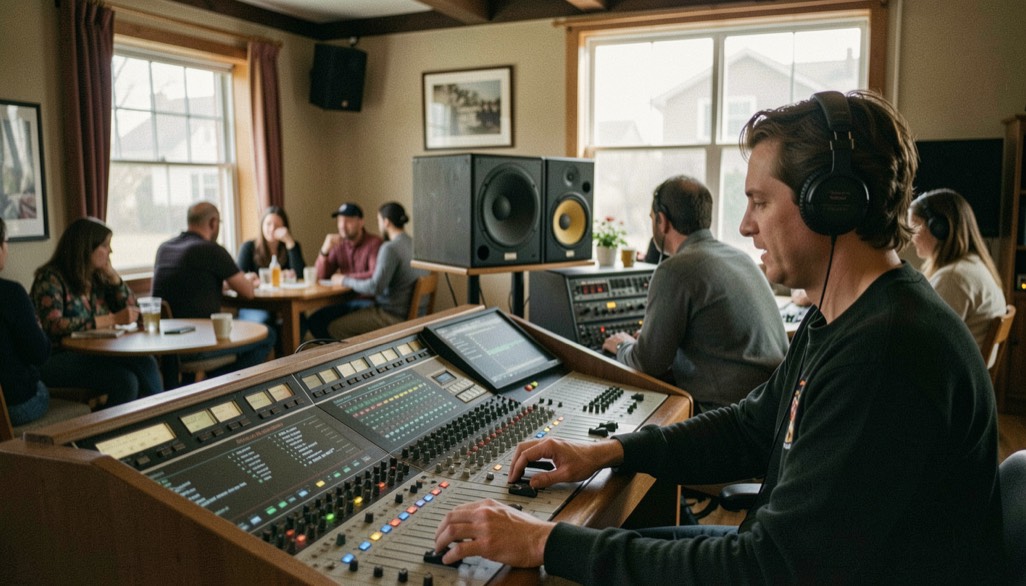
A week of small shows also exposes how much a room shapes what an audience actually hears. The same band can sound thin on a Monday and full on a Friday, and the difference is rarely the songs. It is the PA, the monitor levels, the person at the desk, and how loud the crowd is between songs. Listening back to recordings from those nights makes this obvious, which is why hearing mix balance deserves the same attention as the words. The page at nanyana.com on why production choices deserve as much attention as lyrics walks through that idea in detail, and readers can open it here: hearing mix balance.