What new traders in Inverclyde need to know
A look at the practical steps behind starting a business in Greenock and Inverclyde, from testing an idea to writing a plan that funders will read.
- Published: July 07, 2026
- 474 words
- 3 min read
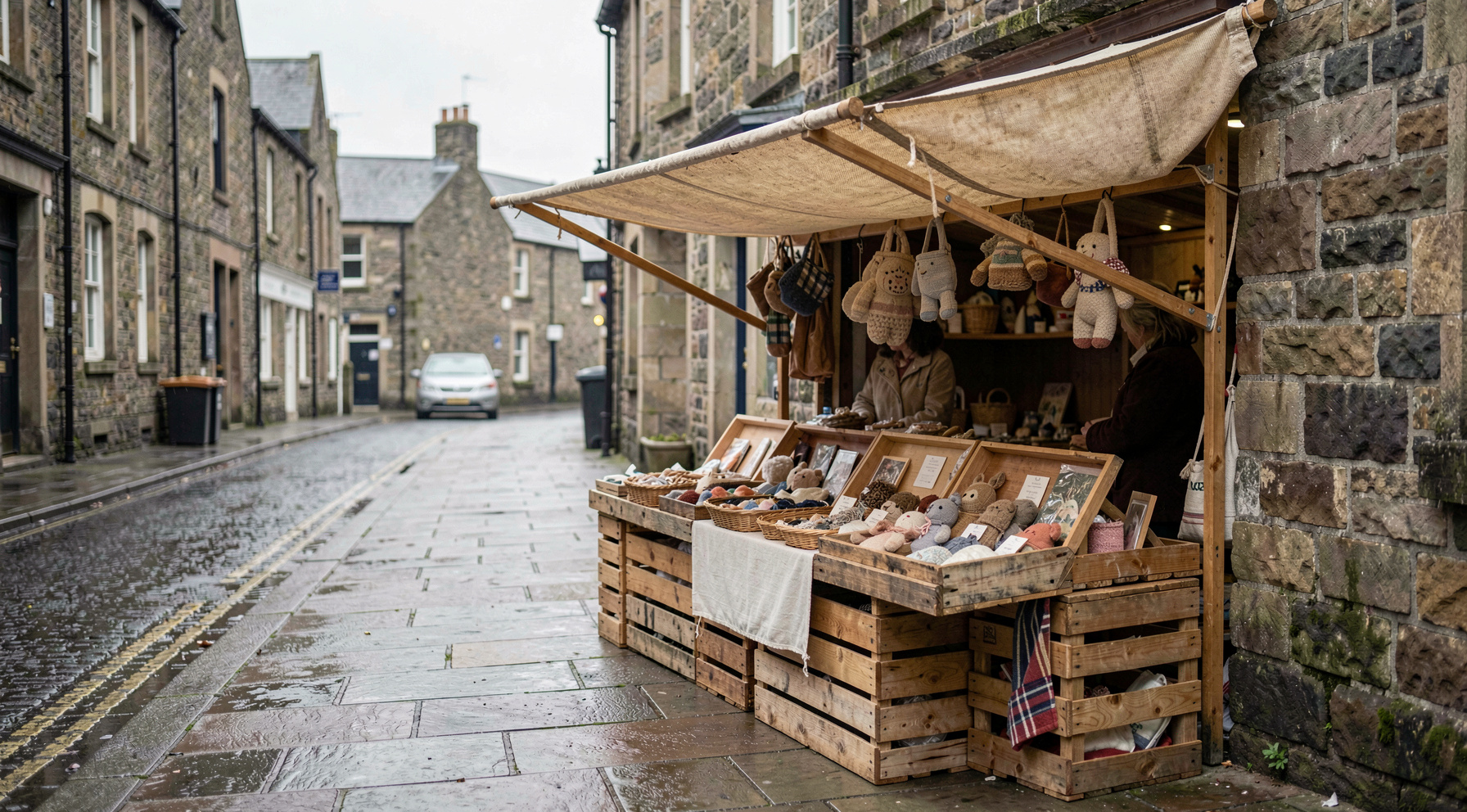
Starting a business in Greenock and Inverclyde comes down to three practical steps: test the idea before spending, choose a legal structure that fits the trade, and write a business plan that funders can actually read. The local chamber's guide to starting a business in Greenock and Inverclyde sets out those steps for new traders and makers, and it treats them as work rather than paperwork. For anyone building a small label, a studio or a shop around music, the sequence matters more than the ambition.
Why does the order of the steps matter?
Most first attempts fail on sequence, not on effort. A maker buys equipment before knowing whether anyone will pay for the output. A trader signs a lease before testing a market stall. The guide places testing first for that reason: an idea that survives a few real transactions is worth a legal structure, and an idea that does not survive them is cheaper to abandon early.
Testing can be small. A run of handmade goods sold at a weekend market, a mixing service offered to three local bands, a repair bench open two days a week. Each version produces the same useful information: who pays, how much, and how often. Numbers from a few weeks of trading beat a year of planning on paper.
Choosing a legal structure without overcommitting
The guide covers legal structures as a decision about liability, tax and admin rather than a badge of seriousness. A sole trader arrangement suits a single person testing a trade with low risk. A limited company suits anyone who needs to separate personal and business finances, or who expects to take on debt, staff or a lease.
Registration is not the hard part. The hard part is knowing which obligations follow the choice: records, filings, insurance, and the point at which a hobby becomes a taxable activity. New traders in Inverclyde who sell online face the same questions as those with a physical counter, and the answers depend on turnover and risk, not on how the business looks from outside.
What should a business plan contain?
A plan written for funders is a short document with evidence in it. The guide's approach is to answer the questions a lender or grant panel will ask, in the order they will ask them: what the business sells, who buys it, what it costs to deliver, what the money is for, and how the owner will know whether it is working.
Three elements carry most of the weight. First, a realistic revenue line built from actual sales or tested prices, not from a share of a large market. Second, a cost line that includes the boring items: insurance, software, travel, accountancy, and the owner's own time. Third, a clear statement of what the funding changes, such as a piece of equipment that removes a bottleneck or stock that allows a larger order.
Funders read many plans. A document that is short, specific and honest about risk tends to be read to the end.
How does the local economy shape the decision?
The chamber's own coverage of Inverclyde companies shows a mixed picture. Online retail changed after the pandemic in ways that lasted: baskets, trust signals, returns handling, digital payment and last mile delivery all shifted, and traders who adapted kept the habits. That matters for anyone planning a shop or a label today, because a physical presence and an online one now share the same customer expectations.
The port and the river remain part of the area's identity and its logistics. Training of the workforce is another recurring theme, which is relevant to anyone who expects to hire: local skills provision exists, and a plan that names the training route for a first employee reads better than one that assumes staff will appear.
What support exists for small firms?
The guide sits alongside other material aimed at firms: money and advice for companies, profiles of Inverclyde businesses, and reporting on the port, the river and workforce training. Read together, they describe an economy of small operators rather than a single large employer.
Support usually arrives in three forms. Advice, which is cheap and often underused. Money, which is competitive and needs a plan. And networks, which are informal and built by turning up. For a new trader, the third is often the fastest route to the first two.
When should a maker register and start paying tax?
The honest answer is earlier than most people expect. Once an activity is regular, organised and pursued for profit, it is a trade, and the obligations begin. Registration, record keeping and reporting follow from that point, not from the moment a business feels legitimate.
Keeping simple records from the first sale solves most of this. Dates, amounts, expenses, and a note of what each payment was for. A year of clean records turns a stressful filing into an afternoon's work, and it makes any later application for funding far easier to assemble.
What trips up first time traders?
Four things recur. Underestimating time, because selling, making and admin compete for the same hours. Pricing from cost rather than from what the market will bear, which leaves no margin for error. Ignoring insurance until a customer asks. And writing a plan for a funder rather than for the business, which produces a document nobody uses after the decision.
The guide's structure addresses each of these by keeping the plan tied to decisions the owner will actually make. Testing an idea, choosing a structure and writing a readable plan are not stages to complete and forget. They are the working method of a small business, revisited whenever the trade changes.
A note on scale
Nothing in this approach requires growth. A one person workshop, a market stall, a small label pressing short runs: all of them need the same three steps, at the same scale as the ambition. The point of testing, structuring and planning is to keep the operation alive long enough to become good at it.
For musicians and makers in the west of Scotland, that is often the whole goal. A trade that pays for itself, run by someone who knows what it costs and who it serves, is a durable outcome. The paperwork is simply how it stays that way.